

LEAR
Blow winds, and crack your cheeks! Rage, blow!
You cataracts and hurricanoes, spout
Till you have drenched our steeples, ⟨drowned⟩ the cocks.
You sulph’rous and thought-executing fires,
Vaunt-couriers of oak-cleaving thunderbolts,
Singe my white head. And thou, all-shaking thunder,
Strike flat the thick rotundity o’ th’ world.
Crack nature’s molds, all germens spill at once
That makes ingrateful man.
FOOL
O nuncle, court holy water in a dry house is
better than this rainwater out o’ door. Good nuncle,
in. Ask thy daughters’ blessing. Here’s a night
pities neither wise men nor fools.
–Shakespeare, King Lear
“At length, before sundown, it begins to rain. You can hardly say when it began, and now, after dark, the sound of it dripping and pattering without is quite cheering. It is long since I heard it. One of those serious and normal storms, not a shower which you can see through, something regular, a fall rain, coincident with a different mood or season of the mind, not a transient cloud that drops rain. Methinks the truly weather-wise will know themselves and find the signs of rain in their own moods, the aspect of their own skies or thoughts, and not consult swallows and spiders. I incline always [to] questions about the weather without thinking. Does a mind in sympathy with nature need a hygrometer?”
-From Thoreau’s Journal; August 25, 1852
Hello my friend, are you visible today?
You know I never knew that it could be so strange, strange
Hello, I’m sorry, I lost myself
I think I thought you were someone else
Should we talk about the weather?
(Hi, hi, hi)
Should we talk about the government?
(Hi, hi, hi, hi)
–R.E.M.
Talk about the Weather
With trepidation, I will, as the prophets of Athens pondered, talk about the weather. We’ve been through a dry spell on the farm. Over and over in August, the scattered showers teased us. Time after time, promised rain approached, only to wither or pass us by. September and October are usually dry in Georgia, save for Atlantic hurricanes, of which we have had next to none this season. I do not fault the forecasters. Their science is remarkable, their task exceedingly complex. Perfectly aware of how irrational it seems, I began to feel a malevolence in the turn of the weather. I began to think we were cursed, that I had, indeed, done some unknown evil that had visited the wrath of the weather on us. When our woods began to dry out, we were invaded by a plague of armadillos (we should all lobby for “plague” to be the official collective term for armadillos), further proof that we were cursed. We, human and more-than-human, are still at the mercy of the weather. To paraphrase the Earl of Gloucester in King Lear, “Like flies to wanton boys are we to the weather gods. They kill us for their sport.”
Still, we are in a dry spell. “Spell” is an Old English word of Germanic origin. Its meanings (and they are legion) carry ancient resonances. The compendium of usage, the lexicographers tell us, includes the following (all hundreds of years old): a tale, a narration, a sermon, a charm, an occult power. I, no doubt, have been charmed by many a good tale, have been carried away, transported, changed, enchanted. Is it not what we storytellers dream of? Such a spell induces what the literary critics call “the willing suspension of disbelief,” though with some tales “willing” suggests more control than I can muster: I’m carried away whether I will it or not. We fall for a good tale like we fall in love. Having believable characters is the heart of any story, and thus, any storyteller, any caster of narratives, any sermonizer worth her or his salt believes in the craft. We dream of characters so believable, so persuasive, so true, that they would be embraced like Lear and his fool. Though it is not the tale I would have chosen, I, unwillingly, have been taken by this dry spell.
I am a faithful follower of the forecasting class. Born to a home carved out of a corn field in the heart of the Midwest, I count as my first best friend the daughter of a farmer, and my family’s holiday gatherings often included the admiring of my uncle’s newest tractor. The background noise of my young life always included conversations about the weather. For the farmers of Illinois, then as now, the weather shapes daily life. The timing of a planting or a harvest is always contingent on the weather. Thus, forecasters, those who might know what the weather will bring, own a privileged place. It follows then that the ability to know what’s coming was, prior to complex weather modelling and radar, sufficiently akin to magic, especially if your livelihood depended on it. I imagine that “forecasting” was once first cousin to “spell casting,” and thus historically part of the occult, the shadowy arts, regardless of cloud cover.
The word “forecasting,” like “spell” has had a long and curious life. One of the earliest textual occurrences of “forecasting,” or more precisely, “casting afore,” is found in the 14th Century translation of the Bible, the Wycliffe translation, in the Book of Job: “Whiche ȝeden awei fro hym bi castyng afore.” In this passage, “forecasting” means premeditated, intentional. Rather than our contemporary denotation (i.e., “forecast” as prediction), it denotes foreordained or predestined. At the end of our three month dry spell, my Calvinist turn of mind bends to the latter. That is to say, good weather is always God’s grace; bad weather is always my fault.
If you know me well, then you have heard me say at some point during the summer gardening season that the first prayer ever uttered was “send rain.” I have prayed that prayer often this year. Those of us blessed or cursed with a love of the land, those of us addicted to the life of the garden, those of us who see our best selves in the soil, see the God of the Hebrew creation story with dirt under her nails. How could we not conflate weather with God’s grace or curse? Weather is a favorite strategy of the God of the Hebrew Bible. Drought sends the sons of Jacob from Canaan to Egypt, where they find their brother Joseph, many years after they had pitched him in a ditch and sold him into slavery, now master of the grain and of the land. Joseph has come to understand the truest nature of weather—that good rains come and go—and has wisely planned for the dry spell now gripping Egypt as well as Canaan. He is a master of the weather. I am little comforted by Joseph’s meteorological wisdom. I know it is all too common to see the land suffer in Georgia in August and September and October. I know, too, that winter will most often bring renewing, restoring rain. If we are wise, we plan for the vagaries of weather. Yet, our beloved plants wither in the dry heat of late summer, and we suffer with them.
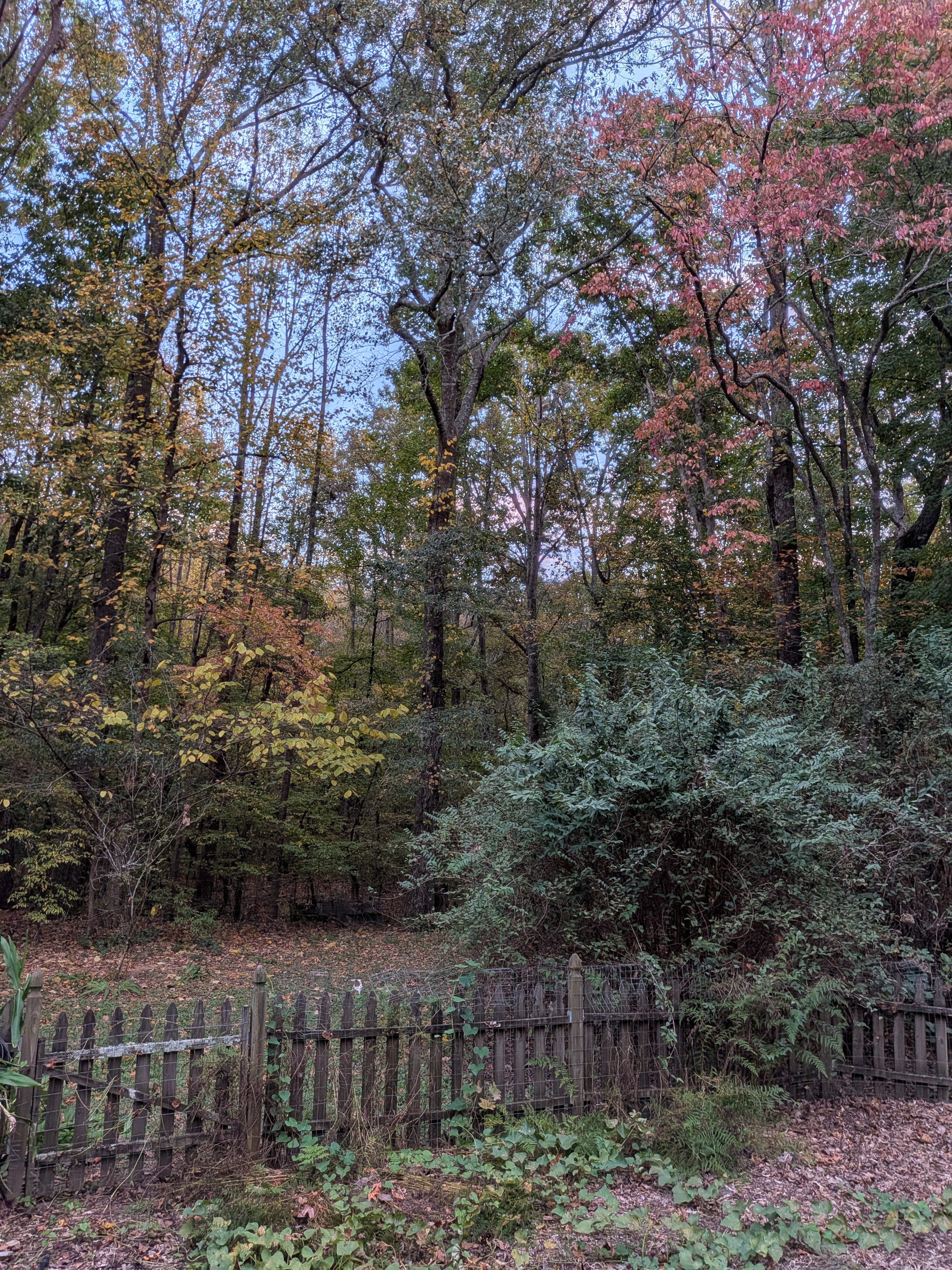
Listen. Do you hear it? Settled in my old pine rocker under my favorite oak at the edge of the apiary, as the sun drifts below the treeline, I hear the gentle hum of the bees and smell the warm comb with hints of the fall bloom of asters and goldenrod. The crickets sing their song, an occasional aria standing out from one close by. A wood thrush calls from beyond the creek. A katydid lands on my leg and tickles me as she wanders about. Our two Great Pyrenees, Zen and Ike, roll in the dusty grass, teasing each other with just a touch of a friendly growl. The western light fades in the tops of the tulip poplars. Though this evening is charming, the dry spell has left its mark all about; even the beauty berries sag, their eponymous fruit shriveled but still a good meal for brown thrashers and scarlet tanagers. All the plants around me are, like me, only earth and water; their leaves wilt for lack of it. With the blessing of rain, most will spring back. Knowing this offers me a modest grace in this mean season.
There is a softness in this moment, a comfort in the trees’ survival of droughts much worse than this one. I begin to fall under their spell. A Carolina wren sings her triplets from the pines. A squirrel scurries through the pine tops; the cone in its mouth will offer an austere meal. The chickens, having luxuriated in dust baths this afternoon, begin to settle on their roosts, giving an occasional cluck of satisfaction at the end of their day.
Sometimes, we craft stories to ease our fear of all that we cannot control. We look for someone or something to blame or bless. I wonder if we shouldn’t listen to the stories, the spells, the sermons that the trees and the beauty berries, the squirrels and the bees tell. They seem not so moved by dry spells. They are not afraid of what the weather will bring. Perhaps, if I were, as Thoreau suggests, “truly weather-wise,” I might “find the signs of rain” in my own moods. Yet, such wisdom can only come, as it does in the entry fro Thoreau’s Journal, at the end of a dry spell. As our farm remains under such a spell, I will continue to consult swallows and spiders. And I will pray for rain.
On Life in the Garden
As the prophet Aldo Leopold says, “There are two spiritual dangers in not owning a farm. One is the danger of supposing that breakfast comes from the grocery, and the other that heat comes from the furnace.”
I have always known, as if born to it, as if I had germinated in the warmth of a spring day in the damp soil, that however the bills were paid, however I managed the business of money, my life’s meaning and truth would be found in the garden.
My writing offers insights on the life I find in the garden and celebrates the glories of the natural world as I work toward an ever greener mind. I hope you will subscribe.
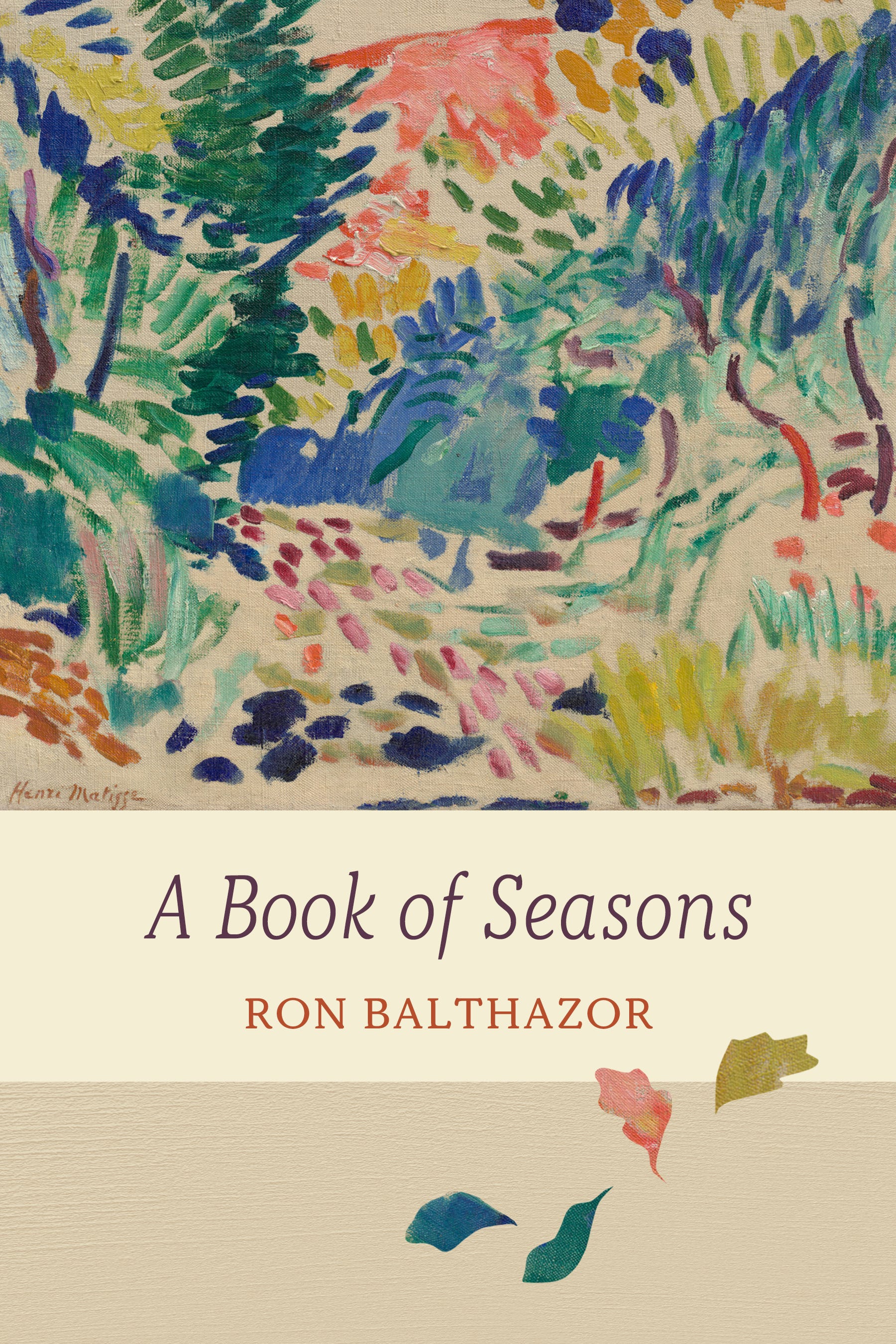
In the spirit of Henry David Thoreau and Aldo Leopold, A Book of Seasons offers a year of meditations on the holiness suffusing even the humblest parts of creation and reflecting on its implications for ourselves and others of all kinds.
Published by Mercer University Press.